


Product Identification
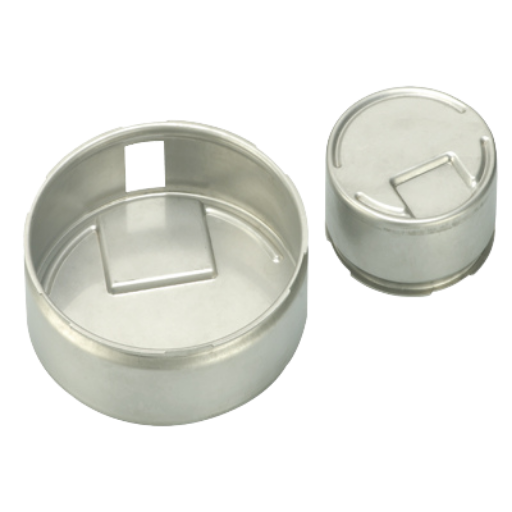
The image shows an "SS304 Cover," typically a deep-drawn or stamped stainless steel end cover or protective cap. These are engineered to protect sensitive or critical components—such as electrical terminals, sensors, bearings, or mechanical enclosures—from environmental contaminants, impacts, and accidental contact. SS304 is chosen for its excellent corrosion resistance and mechanical durability.
Product Use Case
Electrical Enclosures: Used to cap off terminal boxes, end panels, or junctions in industrial controls and instrumentation.
Sensors & Instruments: Protects sensor modules, load cells, or measurement chambers in harsh/cleanroom environments.
Bearing/Rotating Equipment: Shields exposed bearing housings, motor ends, or machinery ways from particles and splash.
Process & Laboratory: Provides sanitary seals in chemical, food, or pharma process lines where stringent hygiene is needed.
Custom Housings: Adapted for any bespoke enclosure or device requiring durable, corrosion-resistant closure.
Industries Served
| Industry | Typical Application |
|---|---|
| Electrical & Power | Termination covers, junction box ends |
| Process & Pharma | Sanitary sealing of exposed vessels/equipment |
| Automation & Sensors | Instrument and probe protection enclosures |
| Food & Beverage | Covers for mixers, sensors, process lines |
| Chemical & Lab | Containment of corrosive/volatile assemblies |
| Automotive & Transport | Wheel/hub protection, sensor covers |
| General Machinery | Bearing caps, mechanical shields |
Detailed Specifications
| Property | Specification |
|---|---|
| Material | Stainless Steel 304 (SS304, AISI 304, UNS S30400) |
| Thickness | 0.5 mm–3 mm typical (customizable) |
| Process | Deep drawing, stamping, blanking, or CNC machining |
| Surface Finish | 2B (mill), brush, or matt finish |
| Corrosion Resistance | Very high (in air, water, many chemicals) |
| Dimensions | Custom as per enclosure; typically 20–200 mm diameters |
| Mechanical Strength | Tensile: 520–720 MPa; Yield: 205 MPa min |
| Temp. Resistance | Up to 870°C (intermittent) |
| Compliance | RoHS, ASTM/ISO as needed |
Key Design Features
Sealing & Protection: Precision-formed for tight fits on round or square enclosures, ensuring effective barrier against dust, liquid, and accidental ingress.
Non-reactive Surface: Essential for food, pharma, and chemical setups—prevents contamination or reaction with contents/components.
Mechanical Safety: Shields exposed terminals and moving parts from mechanical damage, inadvertent touch, or EMI.
Easy Installation/Removal: Usually press-fit, snap-on, or bolt-mounted for effortless service access.
Critical Advantages
Corrosion & Hygiene: Long life in harsh or sanitary settings—meets high cleanliness and durability demands.
Mechanical Robustness: Protects components from impact and provides robust mechanical closure.
Application Flexibility: Easily customized in size, mounting, and finish to fit specific needs.
Low Maintenance: Does not require painting, resists rust, and withstands repeated cleaning.
SS304 covers are a trusted, versatile, and essential protective solution in every industry requiring lasting corrosion resistance, secure mechanical barriers, or cleanable, sanitary closures.
Product Identification
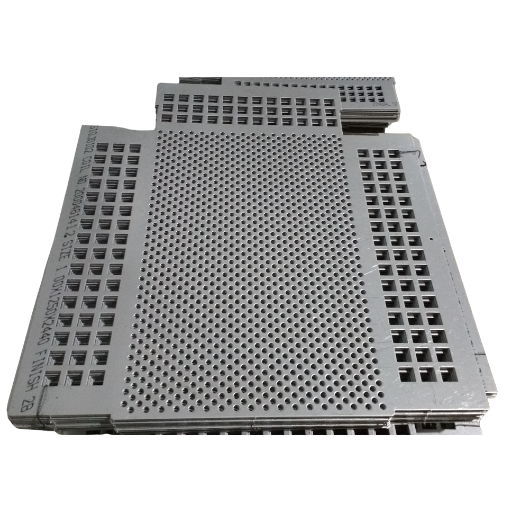
The image displays an "SS Tray for material movement," specifically fabricated from perforated stainless steel sheet. These trays are engineered with a combination of round and square perforations, providing a lightweight, strong, and ventilated surface suitable for industrial and material handling applications. Stainless steel construction ensures durability and resistance to corrosion in harsh or sterile environments.
Product Use Case
Industrial Production: Transporting semi-finished goods, parts, or components between machining, assembly, and packaging stations—especially in automated or semi-automated lines.
Food & Beverage: Handling food items during processing, baking, freezing, or steam sterilization, benefiting from easy cleaning and resistance to odor/contaminants.
Pharmaceutical & Lab: Material transfer trays for batch processing, sterile handling, or heat treatment of vials, instruments, or samples.
Electronics & Cleanroom: Used for moving circuit boards, delicate assemblies, or components without risk of contamination or static build-up.
Warehousing/Logistics: Lightweight, rugged solution for storage, kitting, or movement of small/medium parts in distribution centers.
Industries Served
| Industry | Typical Application |
|---|---|
| Manufacturing | General part transfer, conveyor integration |
| Food Processing | Baking, steaming, freezing, material transfer |
| Pharmaceuticals | Batch handling, sterilization, cleanroom transfer |
| Electronics | Circuit & device handling, ESD-safe movement |
| Automotive | Line-side parts movement & assembly kits |
| Warehousing/Logistics | Picking, sorting, inventory kitting |
| Laboratories/Medical | Sample trays, wash/rinse baskets |
Detailed Specifications
| Property | Specification |
|---|---|
| Material | Stainless Steel (often SS304 or SS316) |
| Thickness | 0.8 mm–3 mm (commonly 1.2–2 mm for industrial use) |
| Dimensions | Customizable, often ~1200–2500 mm length; 200–600 mm width |
| Perforation Pattern | Round, square, or slot (customizable); standard IS/IEC patterns |
| Surface Finish | Polished or 2B mill finish |
| Carrying Capacity | Typically 50–150 kg depending on gauge and tray size |
| Compliance | FDA, ISO, and other industrial standards as required |
Key Design Features
High Strength/Low Weight: Perforations reduce tray weight without sacrificing mechanical integrity—enabling easier manual or automated handling.
Ventilation & Cleanability: Large surface area of holes/slots allows airflow and drainage, essential for quick drying and sanitation in food, pharma, or cleanroom sectors.
Corrosion Resistance: SS304 or SS316 resists acids, alkalis, and repeated wash-down procedures in tough industrial or hygienic contexts.
Edge & Frame Options: Can include raised or flat flanges; laser-cut or drawn for stackability, automated conveyor integration, or ergonomic handling.
Critical Advantages
Sanitary and Easy to Clean: Stainless material and open perforations allow full wash-down and minimize microbial harboring.
Durable & Reusable: Resists dents, corrosion, and repeated use cycles, reducing long-term replacement costs.
Thermal & Chemical Resistant: Suitable for autoclaving, freezing, or chemical washing—applicable across sterile and industrial environments.
Customizable: Can be tailored to fit automation equipment, robots, conveyors, or manual workflow needs.
SS trays for material movement are a cornerstone solution for modern industry, combining hygienic design, ruggedness, and flexibility for virtually any material handling or in-process transfer need.
The image shows an "SS 0.3mm Washer for military purpose," which is a precision-cut, ultra-thin stainless steel washer designed for use in defense, aerospace, or other high-reliability applications. Its unique cutout geometry likely provides specialized locking, alignment, or anti-rotation functionality in fastener assemblies subjected to vibration, mechanical shock, or precise calibration demands.
Product Use Case
Military/Aerospace Fastening: Provides precise load distribution, vibration damping, or anti-rotation for fasteners in vehicles, aircraft, or weapons systems.
Calibration & Micro-Assembly: Used as a shim or spacer for tight-tolerance calibration in sights, optics, or guidance instruments.
Electrical/Electronic Isolation: Ensures separation or proper grounding for critical circuits exposed to moisture or EM interference.
Lubrication Retention & Sealing: Can act as a seal washer in specialty joints, hydraulic assemblies, or fluid lines for military hardware.
Industries Served
| Industry | Typical Application |
|---|---|
| Military & Defense | Vehicle, weapon, and comms system fastening |
| Aerospace | Fastener stack-ups, avionics, sensors |
| Electronics | PCB mounting, shielding, isolation |
| Precision Instrumentation | Micrometer adjustment, laser alignment |
| Automotive | Engine, transmission micro-fitting |
| Medical Devices | MRI-safe, micro-assembly, corrosion reduction |
Detailed Specifications
| Property | Specification |
|---|---|
| Material | Stainless Steel (Typically SS304, SS316, or A2/A4 grades) |
| Thickness | 0.3 mm (ultra-thin; high-precision stamping/laser cutting) |
| Outer Diameter | Custom (commonly 6–30 mm for thin washers) |
| Cutout Features | Custom slots/holes for anti-rotation or electrical isolation |
| Hardness | Up to 200 HV (depending on SS grade and finish) |
| Finish | Cold-rolled, passivated, or bright-annealed |
| Compliance | Mil-spec or Defense Standards (e.g., AN, NAS, MIL-DTL, DIN) |
Key Design Features
Precision Thickness: Ultra-thin profile (0.3 mm) achieves tight stacking, clearance, or spacing requirements in military-grade assemblies, instruments, or electrical isolation.
Corrosion Resistance: SS304 or SS316 ensures long-term reliability in harsh, marine, or field conditions—resists rust, pitting, and stress cracking.
Specialized Geometry: Unique cutout/star or tab design helps prevent washer rotation, aligns with keying features on mating parts, or supports grounding/isolation.
Non-magnetic: Essential for sensitive electronic, navigational, or armament components where magnetic interference is unacceptable.
Critical Advantages
High-Precision & Reliability: Maintains critical assembly tolerances and fastener function despite vibration or thermal cycling.
Ultra-thin Form Factor: Ideal for miniaturized, high-density, or low-profile assemblies where space/weight are at a premium.
Long Service Life: Rugged against corrosion, wear, and environmental stress, with proven defense/military compliance.
Customizable: Geometries, diameters, and holes/slots can be tailored for project-specific functionality or standards.
This SS 0.3mm washer is a critical and high-performance component used in military, aerospace, and precision industrial environments—delivering uncompromised performance in demanding and mission-critical assemblies.
Product Identification
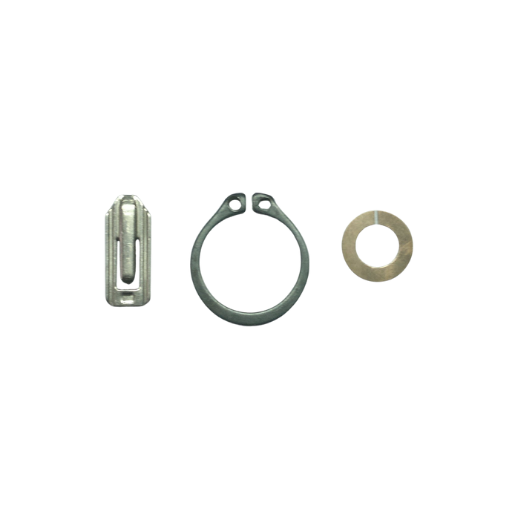
The image shows "power press stamping parts," which are precision metal components manufactured using high-tonnage mechanical or hydraulic power press machines. The process is capable of shaping, slotting, piercing, and forming sheet metal into a vast range of finished or semi-finished components with high repeatability and dimensional accuracy.
Product Use Case
Fasteners & Retaining Rings: E-clips, circlips, wave washers, and specialty retainers for assembly and locking purposes.
Brackets, Clips, and Housings: Support electronic, automotive, and consumer assemblies, often requiring unique slots, bends, or piercings.
Electrical Contacts & Connectors: Tabs, spring contacts, and grounding parts for current-carrying or signal integrity needs.
Washers & Shims: Critical for preloads, anti-vibration, axial positioning, and calibration in many industries.
Industries Served
| Industry | Typical Application |
|---|---|
| Automotive | Body panels, transmission, chassis, and locking hardware |
| Electronics | Connector contacts, relay and fuse clips, cases |
| Industrial Machinery | Gears, springs, levers, cam plates |
| Aerospace & Defense | Structural clips, sensor retainers, precision shims |
| Appliance/Consumer | Brackets, mounting tabs, dials, handles |
| Medical Devices | Instrument parts, housings, and mounting features |
| Construction | Hardware, hangers, joiners for HVAC/sheet metal work |
| Power & Energy | Contact plates, bus bars, transformer shields |
Detailed Specifications
| Property | Specification |
|---|---|
| Material | Carbon steel, stainless steel, copper, brass, aluminum alloys |
| Typical Thickness | 0.1 mm to >5 mm (varies by application and press capacity) |
| Manufacturing Process | Progressive or single-stage die stamping, blanking, piercing, forming, bending |
| Press Force Range | 2 to 500+ tons depending on part and run size |
| Accuracy/Repeatability | Up to ±0.05 mm (progressive die tooling) |
| Volume Suitability | Prototype to mass production, ideal for high-volume runs |
Key Design Features
Complex Shaping: Enables intricate parts (e.g., circlips, slots, washers, brackets) in one or a series of press strokes.
Hardening & Durability: Can integrate coin, emboss, rib, and heat treat where extra mechanical strength is demanded.
Burr-Free Edges: High-precision dies yield parts ready for assembly or require minimal downstream finishing.
Tooling Flexibility: Dies are easily swapped to change part design or accommodate different production runs.
Critical Advantages
Cost-Effective Mass Production: Once tooling investment is made, unit price is very low at scale, supporting affordable, repeatable delivery.
Complexity at Speed: High-speed presses output hundreds or thousands of precise parts per hour with minimum human intervention.
Material Versatility: Supports steels, light alloys, copper, and customized specialty materials for applications from automotive to electronics to defense.
Quality & Consistency: Tight tolerance ensures fit, function, and reliability in safety-critical and high-volume assemblies.
Power press stamping parts underpin the reliability and performance of assemblies in almost every modern precision manufacturing sector—offering unmatched repeatability, geometric flexibility, and production efficiency.
Product Identification
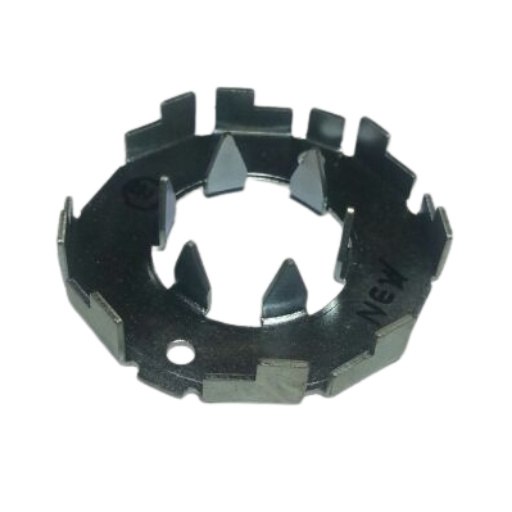
The image shows a stamped "Motor Gear Lock Washer" (also called a motor gear tab washer or lock plate), a specialized stamped steel part used for mechanically fastening rotating motor components in place, preventing unintended loosening under rotation or vibration.
Product Use Case
Electric Motors: Used to secure rotor end nuts, pinion gears, or retaining nuts on armature/rotor shafts; prevents movement under centrifugal load.
Transmissions & Gearboxes: Locks input/output gears, shaft nuts, and other critical elements prone to vibration loosening in rotating assemblies.
Automotive & Machinery: Used anywhere bolted or keyed rotating assemblies might loosen, such as alternators, cam gears, timing gear hubs, and marine/rail equipment.
Power Tools & Appliances: Secures rotating blades, pulleys, or couplings in compressors, grinders, or appliance drives.
Industrial Pumps & Fans: Prevents unthreading of impeller nuts or coupling elements subject to cyclical rotational torque.
Industries Served
| Industry | Typical Application |
|---|---|
| Automotive | Wheel, camshaft, and gear assembly retention |
| Electric Motors | Locking of shaft nuts/gears in AC/DC motors |
| Industrial Machinery | Gearboxes, reduction drives, power transmission |
| Appliances & Power Tools | Blower, pump, and transmission component locking |
| Power Generation | Generators, alternators, and turbine shaft lockers |
Detailed Specifications
| Property | Specification |
|---|---|
| Material | Carbon steel (galvanized/tinned), stainless steel, or alloy steel |
| Typical Thickness | 0.6–2 mm depending on part size and mechanical load |
| Dimensions | Customized to gear/hub/shaft specification (15–60 mm OD typical) |
| Manufacturing Process | Stamped and formed in progressive press die; burr-free finishing |
| Surface Protection | Galvanizing, phosphate, or anti-corrosive plating |
| Key Features | Tabs, tangs, or teeth for mechanical locking |
| Compliance | Follows DIN, ISO, or JIS standards as required by sector |
Key Design Features
Mechanical Locking Tabs: Integral tabs bend over a nut, gear, or keyed surface to securely hold fastener assemblies against loosening from vibration, rotational inertia, or torque.
Positive Retention: Some designs have central tangs for engagement with shaft keyways, or external tabs for engagement with grooves or flats on mating surfaces.
Single-Use or Replaceable: Many are meant to deform once for a secure hold, ensuring only positive engagement and intentional removal/replacement.
High-Strength Material: Hardened/stamped steel construction resists fatigue, abrasion, and repeated loading cycles.
Critical Advantages
Positive Locking: Provides physical deformation and mechanical retention far superior to thread friction alone—absolutely essential in assemblies subject to shock, vibration, or reversing loads.
Zero Back-Off: Completely eliminates back-off issues seen with standard washers or spring washers, enhancing safety and long-term reliability.
Simple & Inexpensive: Easily manufactured and swapped, with low material and tooling costs for high-volume production.
Customizable Geometry: Stamped tabs/tangs/holes can be varied for any shaft/gear/nut size or locking method, suiting OEM and aftermarket requirements.
Stamped lock and tab washers like this are indispensable in modern electric motors, automotive drivetrains, gearboxes, and any heavy-duty mechanical assembly where maintaining bolt/gear/nut integrity under dynamic load is critical.
Product Identification
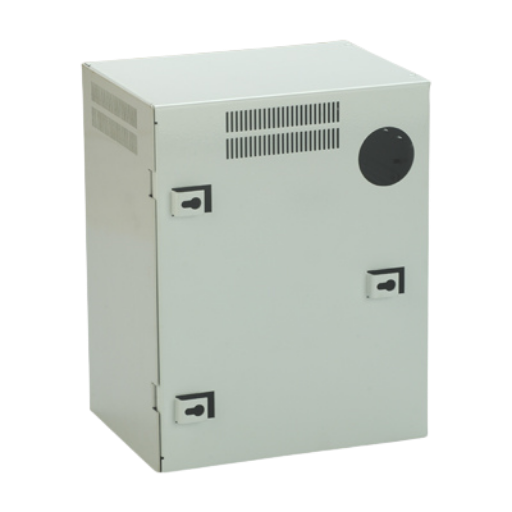
The image shows a "Sheet Metal Enclosure"—a precision-fabricated, typically powder-coated or painted steel (MS/CRCA, SS304/316, or aluminum) box used to protect and organize electrical, electronic, or automation components. It features a hinged door with captive quarter-turn locks, side ventilation slots, and a removable gland plate—supporting secure, ventilated, and service-friendly installation of internal assemblies.
Product Use Case
Electrical Control Panels: Houses disconnects, relays, PLCs, and terminal blocks in manufacturing, processing, or utilities.
Power Distribution: Protects breakers, switchgear, meters, or surge protectors in commercial/industrial buildings.
Automation & Instrumentation: Contains IO devices, communication modules, and process controllers, either wall- or floor-mounted.
Telecom/Networking: Shields routers, switches, and backup power within telecommunications or server rooms.
Industries Served
| Industry | Typical Application |
|---|---|
| Electrical/Power | Control cabinets, distribution boxes, switchgear |
| Industrial/Automation | Machine control, PLC/relay enclosures, safety panels |
| Building Services | Circuit panels, SMART building, HVAC system junctions |
| Telecom/IT | Network device, communication rack, UPS housings |
| Process & Utilities | Water/waste, power plants, pumping stations |
| Medical/Pharma | Instrumentation, cleanroom process control |
| Renewable Energy | Solar inverters, battery, wind/solar site cabinets |
| Automotive/Transport | Vehicle control/fuse boxes, field signal housings |
Detailed Specifications
| Property | Specification |
|---|---|
| Material | Mild Steel (MS), Stainless Steel (SS304/316), or Aluminum Alloy |
| Typical Thickness | 1.2–2.0 mm for wall/door, up to 5 mm for mounting plate |
| Standard Finishes | Powder coated (grey/white RAL colors), polished, or brushed |
| Protection Rating | IP31–IP66 (customizable), IK07–IK10 impact |
| Locking System | Quarter turn, handle, or cylinder lock |
| Mounting Features | Back wall holes, internal gland plate, DIN rail/mounting plate ready |
| Ventilation Option | Perforations or louvered slots on sides/top |
| Custom Options | Custom size, colors, logo, EMI/RFI shielding as required |
Key Design Features
Robust & Protective: Rigid metal construction shields against impact, dust, accidental contact, and moderate moisture, while maintaining electrical insulation and mechanical integrity.
Ventilated: Perforated slots enhance air flow, helping to dissipate heat from internal power supplies, control relays, or sensitive electronics.
Locking & Security: Lockable design ensures only authorized access, supporting safety and compliance in workplace/industrial zones.
Service-Friendly: Hinged or removable doors, mounting plates, and integrated cable management facilitate efficient installation and maintenance.
Critical Advantages
Component Protection: Guards vital electronics and wiring from dust, mechanical damage, EM interference, and unauthorized contact.
Customizable & Scalable: Available in a wide variety of sizes, form factors, and internal layouts—tailored to each project’s needs.
Standards Compliance: Meets industry requirements for impact, ingress, and safety across electrical, industrial, and building applications.
Longevity & Security: Powder coating/SS ensures long service life; robust locking resists tampering.
Sheet metal enclosures are fundamental to safe, reliable operation of electrical, control, and networking systems in virtually every industrial and commercial sector.
Product Identification
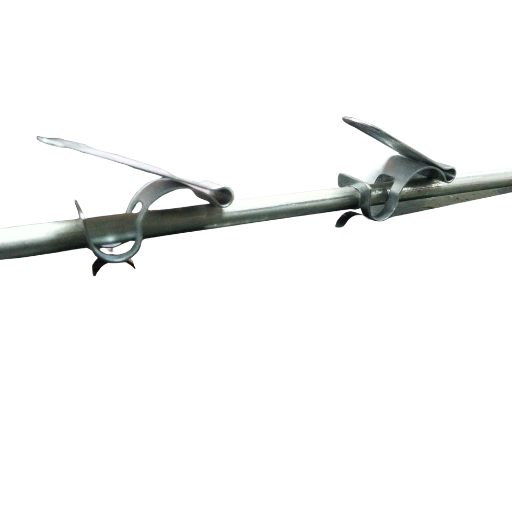
The image shows "Sheet Metal Clips," specifically designed for securely retaining, routing, or fastening wires, cables, or small tubes in place on a frame, panel edge, or channel. These clips are stamped and formed from spring steel or stainless steel for consistent clamping force, corrosion resistance, and repeated use.
Product Use Case
Wire & Cable Management: Secure routing and bundling of electrical wiring within industrial panels, machinery, vehicles, or appliances—improving reliability and organization.
Tube/Pipe Retention: Safe, vibration-resistant mounting of fluid lines, pneumatic/hydraulic hoses, or air/brake pipes in process, transport, or lab systems.
Automotive & Machinery: Fixing wiring harnesses, brake/fuel lines, interior/exterior trim panels, and dashboard components subject to vibration and movement.
Construction & Panel Assembly: Used in field installations for managing conduit, data cables, or control wiring in HVAC, telecom, or electrical cabinets.
Consumer Electronics & Appliances: Guides wires away from moving/heat sources in ovens, refrigerators, fans, etc..
Industries Served
| Industry | Typical Application |
|---|---|
| Automotive | Wiring harnesses, hose retention, dashboard assembly |
| Industrial Machinery | Panel wiring, control cabinet cable management |
| Electronics & Appliances | Cable routing, PCB wire holding, component stabilization |
| Construction | Conduit support, building wiring organization |
| Energy & Renewable | Solar + wind array cable routing, power distribution |
| Aerospace & Defense | Mil-spec wire/line retention, avionics |
| Medical/Laboratory | Equipment wire management, tubing clamps |
Detailed Specifications
| Property | Specification |
|---|---|
| Material | Spring Steel, Stainless Steel (301/302/316), or Phosphor Bronze |
| Thickness | 0.3 mm to 2 mm (customized per strength/application) |
| Surface Finish | Polished, passivated, zinc-plated, or powder coated |
| Dimensions | Custom (fit wire/tube diameters from ~2 mm to 30 mm+) |
| Mounting Type | Snap-on, screw, rivet, adhesive, or weld tabs |
| Typical Shapes | U, P, S, Omega, saddle, or custom spring-formed profiles |
| Mechanical Strength | High-tensile, fatigue-resistant |
| Compliance | RoHS, REACH, or Mil-spec as needed |
Key Design Features
Positive Retention: Spring-action design grips wires/conduits tightly to prevent unwanted movement, vibration-induced wear, or disconnection.
Anti-Corrosion: Stainless steel or zinc-plating resists moisture, chemicals, and wear—enabling both indoor and outdoor use.
Quick Assembly: Clips can be snapped, pressed, or screwed into place rapidly, supporting high-speed assembly lines and reducing labor time.
Reusable and Adjustable: Some designs allow repeated opening/closing without loss of strength, ideal for servicing and frequent maintenance.
Critical Advantages
Fast, Secure Installation: Enables rapid, tool-less mounting in mass production or field service conditions.
Enhances Reliability & Safety: Prevents loose wires/tubes from causing shorts, tangles, or wear points—reducing failures and repairs.
Customizable Shapes: Sheet metal forming allows adaptation to almost any cable, tube, or mounting challenge.
Corrosion Resistant & Reusable: Withstands repeated use and exposure—supporting harsh, demanding industrial environments.
Sheet metal clips are indispensable components for robust, organized, and service-friendly wire and tube management across automotive, manufacturing, electrical, and industrial infrastructure.
Product Identification
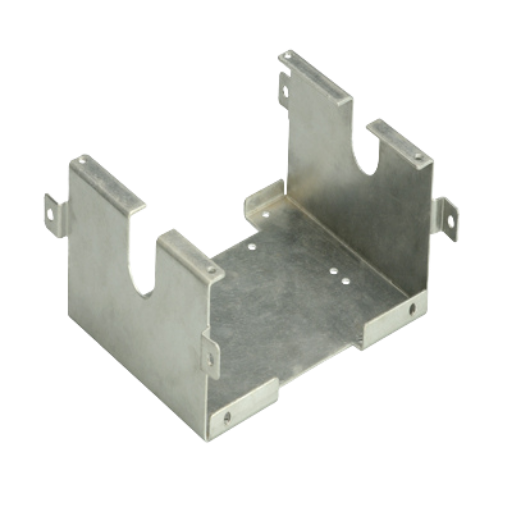
The image shows an "Amplifier Chassis," which is a sheet metal enclosure specifically designed to house, shield, and mechanically protect audio, RF, or power amplifier circuits. This type of chassis typically features formed and punched steel or aluminum, snap-fit tabs, and often includes provisions for grounding, EMI shielding, and thermal management.
Product Use Case
Audio Amplifiers: Chassis for integrated, pre-amplifier, headphone amp, or tube amp circuits, shielding them from EMI and simplifying integration with power supplies.
RF Power Amplifiers: Used in radio, telecom, and wireless equipment to hold and shield power amp and filtering circuits.
Lab & Bench Power Amps: Housing for programmable amplifiers, industrial servo and motion control, or high-power laboratory amp modules.
DIY & Custom Projects: Widely used by OEMs, tinkerers, universities, and startups building bespoke audio or industrial electronic amplifiers.
Industries Served
| Industry | Typical Application |
|---|---|
| Audio & Hi-Fi | Home theater, professional/consumer audio |
| Telecommunications | RF amp, repeater, base station amplifier |
| Industrial Controls | Servo/drive controller, motor control amp |
| Test & Measurement | Signal amplifiers, isolation amps, EMC/antenna testing |
| Medical | Instrument amp, ECG, medical monitoring |
| Automotive/EV | Audio amp modules/telematics equipment |
Detailed Specifications
| Property | Specification |
|---|---|
| Material | Cold rolled steel, aluminum alloy (5000/6000 series), or stainless steel |
| Typical Thickness | 1.2 mm – 2 mm |
| Dimensions | Custom, but typical ranges: 100–450 mm (L), 50–100 mm (H), 100–300 mm (D) |
| Surface Finish | Zinc/chrome plated, powder-coated, or anodized |
| Design Features | Snap tabs, ventilation louvres, grounding points, cutouts for connectors, PCB mounts |
| Shielding | Integral—formed for superior EMI/RFI shielding |
| Compliance | RoHS, REACH, and/or UL as required |
Key Design Features
Precision Formed: Sheet metal or aluminum chassis ensures accurate fits for boards, modules, and heat sinks while allowing for robust mechanical strength.
EMI/RFI Shielding: Fully metallic construction (with close-fitting seams and ground points) provides strong electromagnetic interference control ideal for sensitive audio or RF electronics.
Thermal Management: Top and side cutouts or turrets aid heat dissipation—crucial for high-power or high-fidelity amplification stages.
Custom Cutouts: Stamped or CNC-machined holes for connectors, switches, transformer leads, and PCB mounting—enabling rapid board and wiring integration.
Critical Advantages
Superior Protection: Shields delicate electronics from mechanical damage, EMI/RFI, dust, and contaminants.
Thermal & Mechanical Integration: Supports direct mounting of power and signal boards, transformers, and heavy heatsinks.
Customizable: Easily tailored for branding, device cutouts, board formats, and internal partitioning.
Easy Assembly & Service: Access panels and snap-fit or screw mounts for fast board install and upgrade.
The amplifier chassis is a critical structural and shielding component in all professional, industrial, and high-performance audio and RF electronics, supporting robust, serviceable, and interference-free operation.